
Hidden pet urine stains can cause lingering odors, discoloration, and repeated marking behavior, even after the visible mess has been cleaned. Cats and dogs often urinate in places that are difficult to inspect with the naked eye, such as beneath furniture, along baseboards, inside carpet padding, or on hardwood floor seams.
Fortunately, a UV flashlight—commonly called a black light flashlight—is one of the most effective tools for locating invisible urine stains before they become a long-term problem.
In this comprehensive guide, you’ll learn how to find hidden pet urine stains on carpets, furniture, and hardwood floors, choose the right UV flashlight, understand why stains fluoresce, and avoid common inspection mistakes.
If you’re searching for professional-grade ultraviolet inspection tools, you can explore products from a trusted Professional Flashlight Manufacturer that specializes in high-performance 365nm and 395nm UV flashlights for home and professional use.
Why Pet Urine Is Difficult to Find
Fresh urine is usually easy to clean, but once it dries, the stain often becomes invisible while continuing to release odor-causing compounds.
Hidden urine commonly accumulates in:
- Carpet fibers
- Carpet padding
- Upholstered furniture
- Mattresses
- Hardwood floor joints
- Baseboards
- Curtains
- Pet beds
Without proper detection, residual urine may encourage pets to return to the same location repeatedly.
Why UV Flashlights Reveal Pet Urine
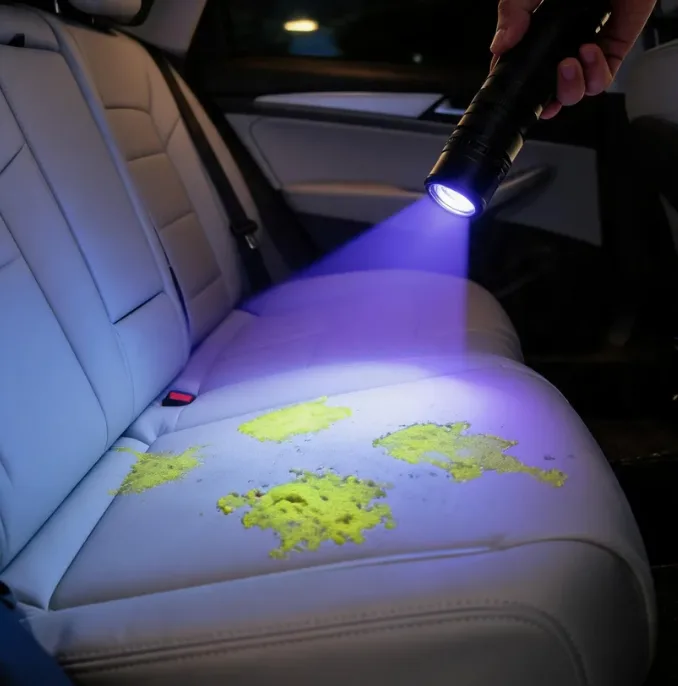
Pet urine contains organic compounds that fluoresce under ultraviolet light.
When illuminated with UV light, dried urine typically appears:
- Yellow-green
- Bright yellow
- Whitish-blue
- Pale green
The exact appearance depends on:
- Surface material
- Urine age
- Cleaning products previously used
- Type of UV flashlight
According to The American Veterinary Medical Association Pet Owner Resources, thoroughly removing urine odors is an important part of preventing repeat marking behavior in pets.
Best UV Wavelength for Detecting Pet Urine
Choosing the right wavelength has a significant impact on stain visibility.
| Feature | 365nm UV Flashlight | 395nm UV Flashlight |
|---|---|---|
| Urine Fluorescence | Excellent | Good |
| Visible Purple Light | Minimal | Strong |
| Professional Cleaning Use | Yes | Occasionally |
| Dark Carpet Performance | Excellent | Fair |
| Hidden Stain Detection | Outstanding | Moderate |
| Cost | Higher | Lower |
Professional cleaners generally prefer 365nm UV flashlights because they produce stronger fluorescence with less visible violet light.
Where Hidden Pet Urine Is Most Common
| Area | Why It Is Often Missed |
|---|---|
| Carpet edges | Covered by furniture or baseboards |
| Under sofas | Difficult to inspect visually |
| Behind curtains | Frequently used by cats |
| Hardwood floor seams | Urine penetrates between boards |
| Upholstered furniture | Absorbs liquid beneath fabric |
| Mattresses | Stains soak below the surface |
| Pet beds | Repeated accidents accumulate over time |
| Closets | Quiet locations attract nervous pets |
Inspecting these areas regularly helps prevent long-term odor problems.
Step-by-Step Guide to Finding Hidden Pet Urine Stains
Step 1: Wait Until the Room Is Dark
Turn off interior lights and close blinds or curtains.
Dark environments dramatically improve UV fluorescence.
Nighttime inspections usually produce the clearest results.
Step 2: Remove Surface Clutter
Move:
- Chairs
- Rugs
- Pet toys
- Storage bins
- Small furniture
This provides full access to potential accident locations.
Step 3: Use the Correct UV Flashlight
For optimal performance, choose a flashlight with:
- 365nm wavelength
- Optical filter
- Rechargeable battery
- Wide inspection beam
- Durable aluminum housing
These features improve stain visibility and inspection efficiency.
Step 4: Scan Slowly
Hold the flashlight approximately 6–24 inches (15–60 cm) above the surface.
Move slowly across:
- Carpets
- Hardwood floors
- Upholstery
- Walls
- Baseboards
A slow, overlapping scan reduces the chance of missing small stains.
Step 5: Mark Detected Areas
Use painter’s tape or removable sticky notes to mark every fluorescent spot before cleaning.
This prevents accidentally overlooking hidden contamination.
Step 6: Clean Thoroughly
After locating stains:
- Blot excess moisture if present.
- Apply an enzymatic cleaner designed for pet urine.
- Allow adequate dwell time according to the product instructions.
- Blot or extract the cleaner.
- Let the area dry completely.
- Reinspect with the UV flashlight to confirm the residue has been removed.
Enzymatic cleaners break down odor-causing compounds instead of simply masking smells.
Surface-by-Surface Inspection Tips
Carpets
Carpets are the most common location for hidden pet urine.
Pay special attention to:
- Room corners
- Entryways
- Under furniture
- Stair edges
- High-traffic areas
If urine has penetrated the padding, professional deep cleaning may be necessary.
Upholstered Furniture
Pets often urinate on:
- Sofa cushions
- Armrests
- Recliners
- Fabric chairs
- Pet blankets
Check seams and creases where liquid can collect.
Hardwood Floors
Hardwood flooring presents unique challenges because urine can seep between boards.
Inspect:
- Floor joints
- Baseboards
- Beneath rugs
- Around pet feeding areas
Prompt cleaning helps prevent staining and warping.
Walls and Baseboards
Cats frequently spray vertical surfaces rather than floors.
Inspect:
- Wall corners
- Door frames
- Baseboards
- Furniture legs
These areas are often overlooked during routine cleaning.
Common Mistakes When Searching for Pet Urine
Using Decorative Black Lights
Party black lights are not designed for inspection.
Professional UV flashlights provide stronger ultraviolet output and better optical filtering.
Inspecting During Daylight
Sunlight significantly reduces fluorescence visibility.
Inspect after dark whenever possible.
Scanning Too Quickly
Fast movements make small stains easy to miss.
Take your time and overlap each pass.
Assuming Every Bright Spot Is Urine
Some materials also fluoresce under UV light, including:
- Laundry detergent residue
- Certain carpet fibers
- Cleaning products
- Adhesives
- Beverage spills
Confirm suspicious areas with odor, location, or cleaning history before assuming they are urine.
Cleaning Only Visible Areas
Urine often spreads beyond the visible fluorescent boundary.
Treat a slightly larger area than the stain itself to help remove all residue.
Can Old Pet Urine Still Be Detected?
Yes.
Dried urine can remain visible under UV light for months or even years if residue is still present.
However, several factors influence visibility:
| Factor | Effect on Detection |
|---|---|
| Time since accident | Older stains may appear dimmer |
| Previous cleaning | Some products reduce fluorescence |
| Carpet color | Dark carpets may require stronger UV output |
| Surface material | Porous materials absorb more residue |
| UV wavelength | 365nm generally offers better visibility |
Even faint stains should be cleaned thoroughly to help eliminate lingering odors.
Are UV Flashlights Safe?
Quality UV flashlights are generally safe when used responsibly.
Recommended precautions include:
- Avoid shining UV light directly into eyes.
- Do not point the flashlight at pets.
- Limit prolonged skin exposure.
- Store the flashlight out of children’s reach.
- Wear UV-protective glasses during extended inspections if recommended by the manufacturer.
The U.S. Food and Drug Administration UV Radiation Information provides additional guidance on safe ultraviolet exposure.
Frequently Asked Questions
What color does pet urine appear under a UV flashlight?
Most urine stains glow yellow-green, bright yellow, or whitish-blue depending on the surface and the type of UV light used.
Is a 365nm UV flashlight better than 395nm?
Yes. A true 365nm flashlight typically provides stronger fluorescence with less visible purple light, making hidden stains easier to identify.
Can UV light detect both cat and dog urine?
Yes. Both cat and dog urine contain compounds that can fluoresce under ultraviolet light.
Will old urine stains still glow?
In many cases, yes. As long as organic residue remains, dried stains may still fluoresce even after months or years.
Can a UV flashlight replace deep cleaning?
No. A UV flashlight helps locate contamination, but proper removal requires appropriate cleaning methods, such as enzymatic cleaners or professional extraction equipment.
Final Thoughts
Finding hidden pet urine stains early is the key to maintaining a clean, odor-free home and preventing pets from repeatedly marking the same areas. A quality UV flashlight allows you to uncover stains that are invisible under normal lighting, making it easier to target cleaning efforts where they are truly needed.
For the best results, choose a professional-grade 365nm UV flashlight, inspect rooms in complete darkness, and clean affected areas with an enzymatic solution designed for pet accidents. Regular inspections of carpets, furniture, hardwood floors, and other common hiding places can help protect your home, improve indoor hygiene, and extend the life of your flooring and furnishings.


