
Air conditioning systems rely on refrigerants to transfer heat efficiently, but even a small refrigerant leak can reduce cooling performance, increase energy costs, and damage system components.
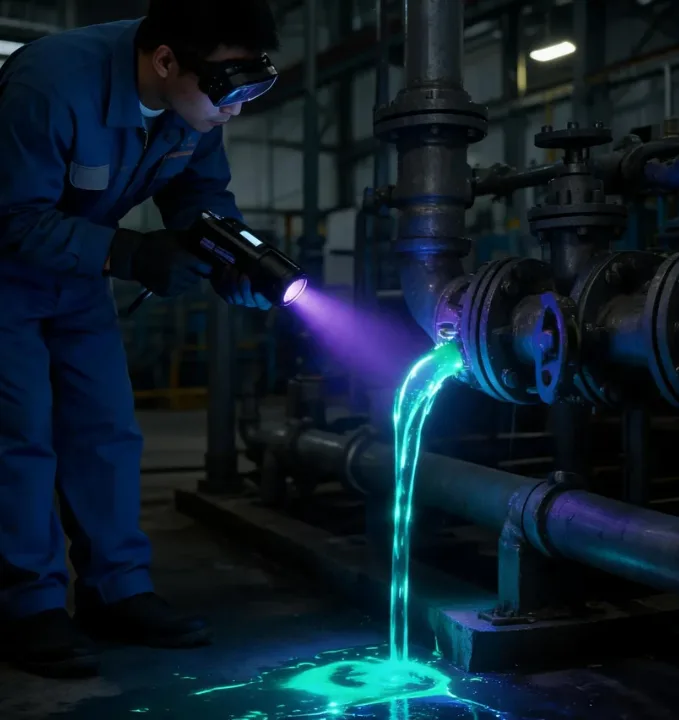
One of the most effective methods for locating refrigerant leaks is using a UV black light flashlight combined with fluorescent leak detection dye. When exposed to ultraviolet light, the dye glows brightly, allowing technicians to identify the exact leak location.
However, not all black light flashlights are suitable for AC leak detection. Wavelength accuracy, UV intensity, beam quality, battery performance, and durability all influence inspection results.
Professional HVAC technicians often choose specialized UV lighting solutions from a Professional Flashlight Manufacturer because professional-grade UV flashlights provide more consistent output and better inspection accuracy.
This guide explains what makes a good AC leak detection flashlight and how to select the best option for automotive, residential, and industrial HVAC applications.
How UV Flashlights Detect AC Refrigerant Leaks
UV leak detection works through fluorescence technology.
The process is simple:
- A fluorescent dye is added to the AC system.
- The dye circulates with the refrigerant oil.
- When a leak occurs, dye escapes with the refrigerant.
- A UV flashlight illuminates the area.
- The fluorescent dye glows, revealing the leak location.
Unlike traditional visual inspections, UV detection allows technicians to find leaks that may be too small to see under normal lighting.
Why Use a Black Light Flashlight for AC Leak Detection?
Traditional leak detection methods have limitations.
Comparison of Leak Detection Methods
| Method | Advantages | Limitations |
|---|---|---|
| Visual inspection | Simple and inexpensive | Cannot detect small leaks easily |
| Soap bubble test | Low cost | Requires accessible leak points |
| Electronic detector | Highly sensitive | Requires calibration |
| UV flashlight + dye | Fast and visual | Requires fluorescent dye |
UV inspection is especially valuable because it allows technicians to see the exact location of a leak.
What Makes the Best UV Flashlight for AC Leak Detection?
A professional AC leak detection flashlight should have several key features.
1. Correct UV Wavelength
The wavelength is the most important factor.
365nm vs 395nm for AC Leak Detection
| Feature | 365nm UV | 395nm UV |
|---|---|---|
| Visible purple light | Low | High |
| Fluorescence contrast | Excellent | Moderate |
| Professional inspection | Recommended | Basic use |
| Dye visibility | Strong | Acceptable |
Most professional HVAC technicians prefer 365nm UV flashlights because they provide cleaner UV output and reduce distracting purple light.
2. High UV Output Intensity
A weak UV light may fail to reveal small leaks, especially in:
- Engine compartments
- Outdoor HVAC units
- Large commercial systems
High-output UV flashlights provide:
- Longer inspection distance
- Faster scanning
- Better visibility under daylight conditions
3. Optical Filtering
A UV filter improves inspection accuracy.
Benefits of UV Filters
| Feature | Benefit |
|---|---|
| Blocks visible violet light | Cleaner fluorescence |
| Improves contrast | Easier leak identification |
| Reduces eye discomfort | Better user experience |
A filtered 365nm flashlight usually produces better results than an unfiltered model.
4. Beam Pattern
AC leak inspection requires both intensity and coverage.
Beam Comparison
| Beam Type | Best Application |
|---|---|
| Narrow spot | Checking specific components |
| Wide flood | Scanning large AC systems |
| Adjustable focus | Multiple inspection tasks |
A balanced beam is often the best choice for technicians.
5. Battery Runtime
HVAC professionals often work in locations where charging is inconvenient.
Important battery features:
- Long runtime
- Rechargeable lithium battery
- USB-C charging
- Battery level indicator
6. Durable Construction
AC technicians often work in harsh environments.
Recommended features:
- Aluminum alloy housing
- Impact resistance
- Waterproof protection
- Heat dissipation design
A durable flashlight reduces replacement costs.
Best UV Flashlight Categories for AC Leak Detection
Rather than choosing only by price, select according to your working environment.
1. Professional HVAC Inspection UV Flashlights
Best for:
- HVAC technicians
- Automotive service centers
- Industrial maintenance
Features:
- 365nm output
- High UV intensity
- Rugged construction
- Long runtime
2. Compact UV Inspection Flashlights
Best for:
- DIY users
- Home maintenance
- Occasional inspections
Advantages:
- Affordable
- Lightweight
- Easy storage
3. Rechargeable UV Flashlights
Best for:
- Daily professional use
Advantages:
- Lower operating cost
- Reliable power
- Convenient charging
AC Leak Detection Flashlight Comparison
| Feature | Basic UV Flashlight | Professional UV Flashlight |
|---|---|---|
| Wavelength accuracy | Variable | Precise |
| UV filter | Sometimes | Usually included |
| Runtime | Limited | Extended |
| Durability | Moderate | High |
| Professional use | Limited | Excellent |
Automotive AC Leak Detection Applications
UV flashlights are widely used for vehicle maintenance.
Common inspection areas:
- Compressor connections
- Condenser
- Evaporator drain
- Refrigerant hoses
- Service ports
A compact UV flashlight allows technicians to inspect difficult areas quickly.
Residential HVAC Leak Detection
Home HVAC systems may develop leaks in:
- Refrigerant lines
- Coil assemblies
- Connection points
A UV flashlight helps homeowners and technicians locate problem areas before major system failure occurs.
Industrial Refrigeration Applications
Large systems require reliable inspection tools.
Applications include:
- Cold storage systems
- Commercial refrigeration
- Manufacturing facilities
- Warehouse cooling systems
Professional UV flashlights help reduce downtime and maintenance costs.
Common Mistakes When Choosing an AC Leak Detection UV Light
Choosing Visible Brightness Instead of UV Performance
A bright purple beam does not always mean strong UV output.
Using the Wrong Wavelength
A low-quality 395nm flashlight may appear bright but provide weaker fluorescence contrast.
Ignoring Battery Performance
A flashlight that loses power quickly can interrupt field inspections.
Selecting a Poor Optical Design
Cheap lenses may create uneven beams and reduce detection accuracy.
How to Use a UV Flashlight for AC Leak Detection
Step 1: Add Fluorescent Dye
Follow the dye manufacturer’s instructions.
Step 2: Run the AC System
Allow the refrigerant and dye to circulate.
Step 3: Turn Off Bright Lighting
Dark conditions improve fluorescence visibility.
Step 4: Scan Slowly
Inspect:
- Connections
- Hoses
- Seals
- Components
Step 5: Confirm the Leak
A glowing area indicates possible leakage, but further repair procedures may be required.
UV Safety During Leak Inspection
Although long-wave UVA is commonly used, safety precautions are still important.
Recommended practices:
- Avoid looking directly into UV LEDs.
- Wear UV-protective glasses during extended use.
- Do not shine UV light at others.
- Follow equipment instructions.
For UV safety information:
How Professional Manufacturers Improve UV Flashlights
High-quality UV flashlights require careful engineering.
Professional manufacturers focus on:
- LED wavelength consistency
- Optical filtering
- Thermal management
- Battery safety
- Waterproof construction
Businesses looking for OEM or specialized inspection lighting solutions can work with a Professional Flashlight Manufacturer to develop products tailored for HVAC, automotive, and industrial applications.
Future Trends in UV Leak Detection Technology
The UV inspection industry is evolving with:
- Higher-efficiency UV LEDs
- Smart battery monitoring
- Multi-wavelength flashlights
- Improved optical filters
- More compact professional tools
These improvements are making leak detection faster and more accurate.
Frequently Asked Questions
What wavelength is best for AC leak detection?
A 365nm UV flashlight is generally preferred because it provides strong fluorescence with minimal visible purple light.
Can any black light detect refrigerant leaks?
Not necessarily. The flashlight must produce the correct UV wavelength and sufficient intensity to activate fluorescent dye.
Is a brighter UV flashlight always better?
No. Wavelength accuracy, beam quality, and filtering are equally important.
Can UV flashlights detect refrigerant without dye?
Most UV leak detection systems require fluorescent dye. The flashlight reveals the dye rather than the refrigerant itself.
How far can a UV flashlight detect AC leaks?
Detection distance depends on UV output, dye concentration, ambient light, and surface conditions.
Final Thoughts
The best black light flashlight for AC leak detection should provide accurate UV output, strong fluorescence visibility, reliable battery performance, and professional durability.
For most HVAC professionals, a filtered 365nm rechargeable UV flashlight offers the ideal balance of performance and portability.
Whether you work on automotive air conditioning, residential HVAC systems, or industrial refrigeration equipment, choosing a reliable UV inspection tool improves efficiency and reduces troubleshooting time.
For businesses seeking customized UV inspection solutions, partnering with an experienced Professional Flashlight Manufacturer can provide application-specific designs, OEM options, and consistent product quality.


